Parker Keller · 9 October 2026
Tracing Information Flow Through Community-Driven Verification Layers in Q&A Networks
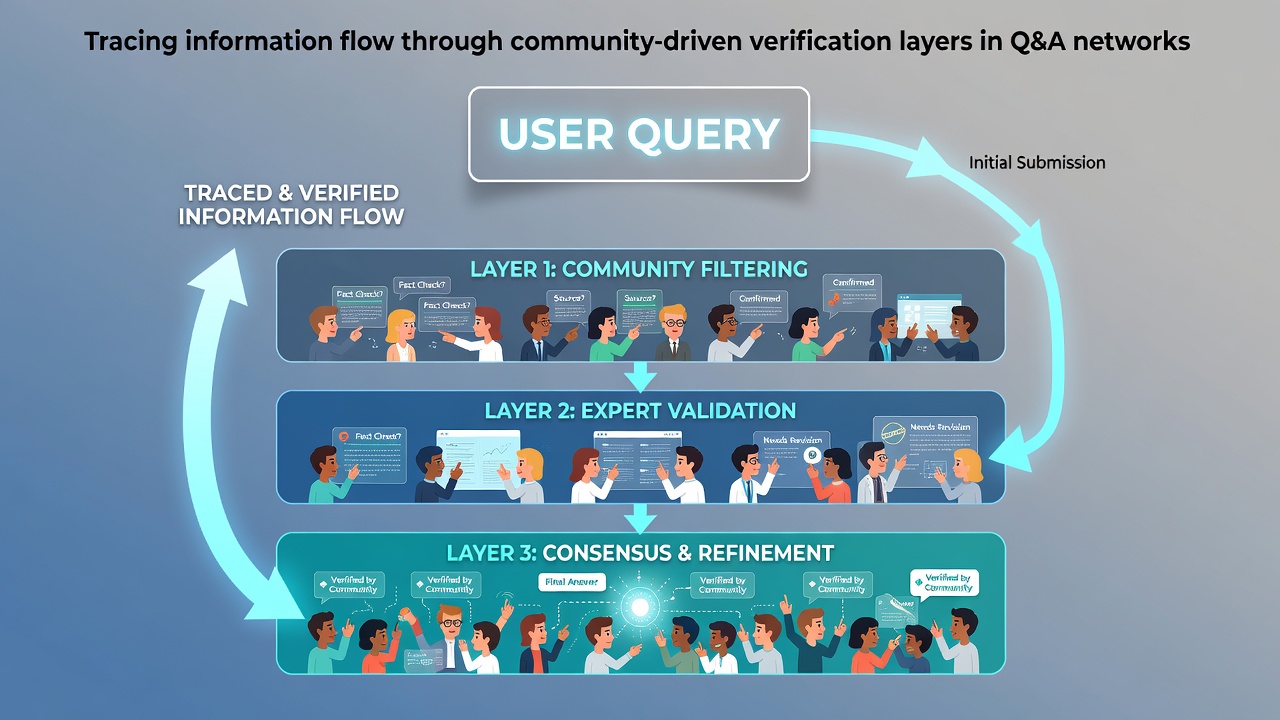
Information enters Q&A networks when users submit questions that prompt responses from other participants, and the subsequent flow passes through successive layers of community scrutiny before reaching wider visibility or accepted status. These layers include initial posting, voting mechanisms, comment threads, editing privileges, and moderation flags that together shape how content gains or loses prominence over time.
Initial Posting and Early Exposure
A question appears on the platform and immediately becomes available for answers from registered users, yet the visibility of those answers depends on algorithmic sorting combined with early community signals such as up-votes or down-votes. Observers note that rapid accumulation of positive votes can elevate an answer within minutes, while negative signals push competing responses lower in the display order. This early stage sets the trajectory for further verification because subsequent users tend to engage more with higher-ranked items.
Community Voting as a Core Filter
Voting systems operate as distributed quality checks where each participant contributes a single signal that aggregates into collective rankings, and studies have shown these tallies correlate with external measures of accuracy when large numbers of voters participate. Yet single votes carry limited weight until patterns emerge across hundreds or thousands of interactions, at which point an answer may receive badges or featured placement. Data indicates that answers crossing certain vote thresholds experience exponential increases in views because the platform surfaces them more prominently to new visitors.
Comment Threads and Iterative Refinement
Comment sections allow direct challenges to specific claims within an answer, creating a secondary channel where factual corrections surface without requiring a full new response. Researchers discovered that threads containing citations or links to primary sources often lead to revisions by the original author, while unanswered challenges can reduce the perceived reliability of the parent answer. This back-and-forth continues until participants reach a stable version or move on to newer content.
Editing Privileges and Collaborative Maintenance
Users who accumulate sufficient reputation gain the ability to edit answers directly, which introduces another verification layer through collective authorship rather than simple endorsement. Edits range from minor grammar fixes to substantive additions of references, and each change remains visible in revision histories that later readers can inspect. In October 2026 platform logs revealed thousands of such edits occurring daily across major networks, with the majority preserving original intent while improving clarity or sourcing.
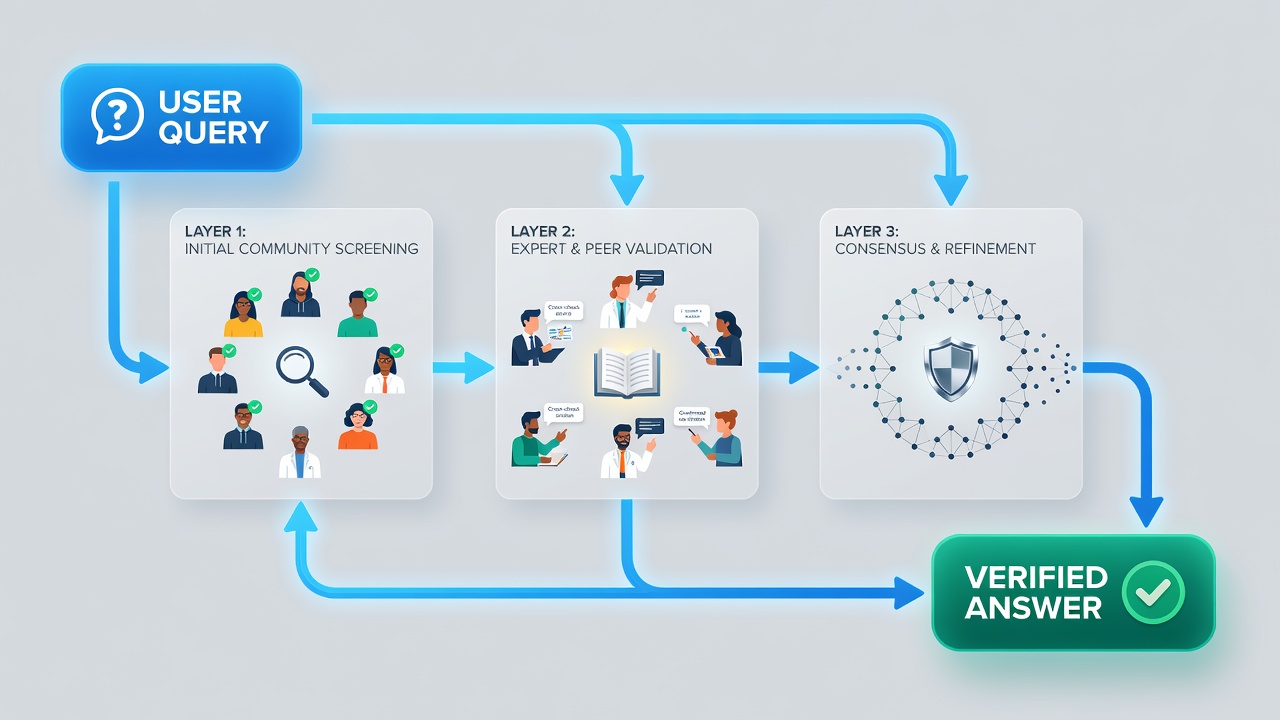
Moderation flags provide an escalation path when content violates guidelines, routing disputed material to elected or appointed moderators who decide whether to hide, edit, or retain the item. According to reports compiled by the Pew Research Center, moderation actions in large Q&A communities affect roughly 2 to 5 percent of all posts yet account for the majority of content removals related to misinformation. These interventions close loops in the information flow by preventing further propagation of flagged material.
Reputation Systems and Expertise Signaling
Badges and reputation scores function as persistent signals that accompany individual contributions across multiple threads, allowing readers to weigh answers from users with demonstrated history in specific topics. Those who've studied participation patterns observe that high-reputation users receive disproportionate attention even when their answers accumulate votes more slowly than those from newer accounts. The system thereby channels information toward contributors whose prior activity has already passed repeated community tests.
Cross-Network Propagation and External Validation
Content sometimes migrates from one Q&A platform to another through sharing features or search engine indexing, extending the verification layers beyond the original site. External sources such as government datasets or academic repositories may be cited within answers, and links to these materials undergo additional scrutiny when readers follow them and report discrepancies back in comments. A study published through the OECD digital economy series documented that answers containing verifiable external references maintain higher retention rates over multi-year periods compared with uncited responses.
Conclusion
The tracing of information through Q&A networks reveals a sequence of overlapping community mechanisms that progressively filter, refine, and validate content from initial submission onward. Voting, commenting, editing, moderation, and reputation layers interact to determine which answers reach sustained visibility, while external citations and cross-platform movement add further checkpoints. Data from multiple sources shows these processes operate continuously, producing measurable differences in accuracy and longevity for content that survives successive stages of review.